2022
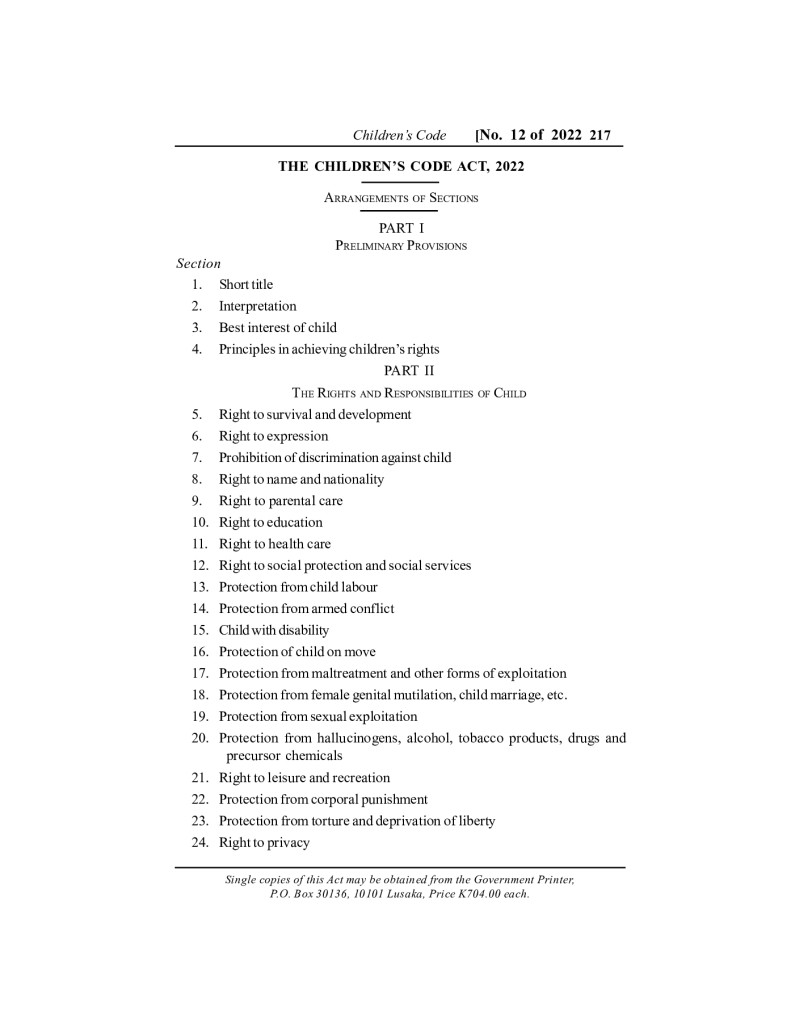
The Children’s Code Act, 2022 consolidates and modernizes laws relating to children by making comprehensive provision for the rights of the child, parental responsibilities, alternative care arrangements such as guardianship, foster care, and adoption, and the protection of children in need of care or in conflict with the law. The Act further provides for the regulation and delivery of child welfare services, establishes the National Child Development Council, and aims to ensure the holistic development, protection, and participation of every child in Zambia.
2022
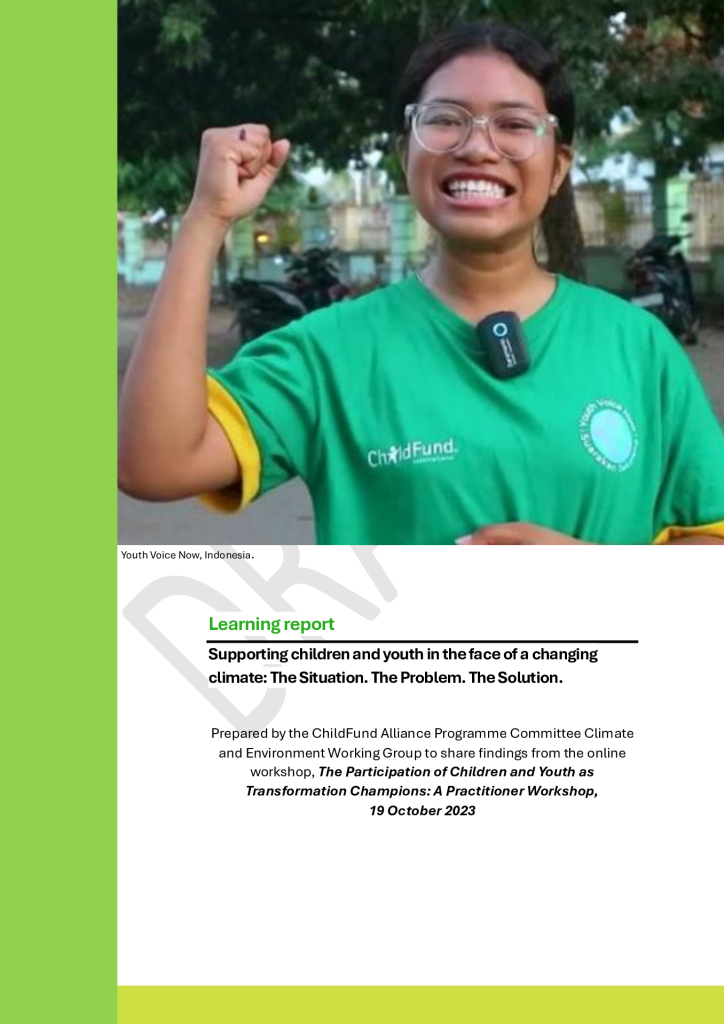
This report summarizes findings from the ChildFund Alliance Program Committee’s Climate and Environment Working Group’s online workshop, The Participation of Children and Youth as Transformation Champions: A Youth Practitioner Workshop, held on 19 October 2023. The workshop aimed to shed light on the challenges faced by youth and children in the context of mental health, resource access, capacity building, and policy influencing, within the changing climate landscape.
2022
This report presents the findings of a six-month evaluation of a child marriage prevention project implemented by Chongwe Child Development Agency in Nyashishi community. The evaluation assessed the project's relevance, efficiency, effectiveness, sustainability, and potential outcomes. It reviews interventions such as school construction to enhance girls' access to education, life skills and reproductive health and rights training for adolescents, economic empowerment for vulnerable households, and community capacity-building to prevent child marriages. Using household surveys, interviews, and observations, the report highlights the project's impact in creating a safer and more enabling environment for girls
2023
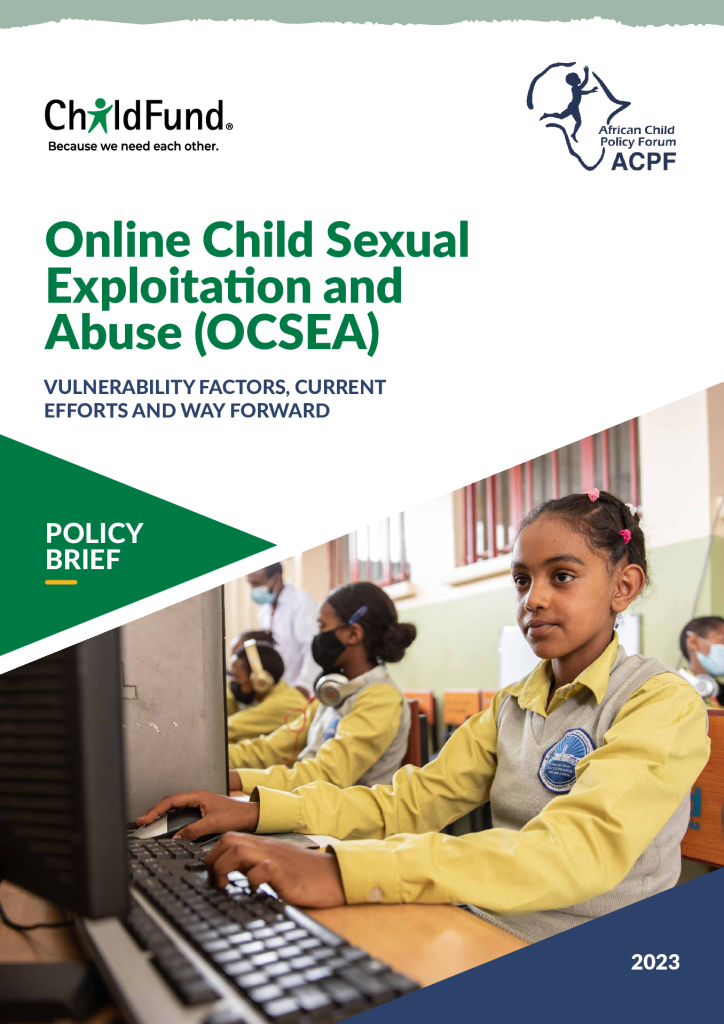
This Policy Brief, prepared by ChildFund, in collaboration with the African Child Policy Forum, is a succinct summary of two extended policy briefs on the scale, drivers and impact of online sexual exploitation and abuse of children and programmatic, policy efforts and gaps, respectively, in Africa.
2023
This brief focuses on policy measures and gaps in policies, legislations and standards, governance structures and coordination and programmes and services related to online sexual exploitation and abuse of children in Africa, including Zambia.
2024
This Fact Sheet provides a snapshot of Zambia’s worst agricultural season in over four decades, detailing the devastating impact of prolonged drought on food security, child nutrition, and community well-being. With over 9 million people affected across 84 districts, including 2.9 million children under five, the crisis has pushed vulnerable families into acute food insecurity and heightened health risks. ChildFund’s Emergency Response Nutrition Program aims to combat rising malnutrition in hard-hit districts such as Kafue, Chongwe, Rufunsa, Shibuyunji, and Chilanga. The program targets over 15,000 vulnerable individuals—primarily children and pregnant/lactating women—with life-saving nutritional support, including therapeutic feeding and iron-rich supplements. As Zambia faces a deepening humanitarian crisis, immediate interventions are needed to protect lives, restore dignity, and prevent long-term harm to the country’s youngest citizens. This publication highlights urgent needs and outlines targeted solutions.
2022
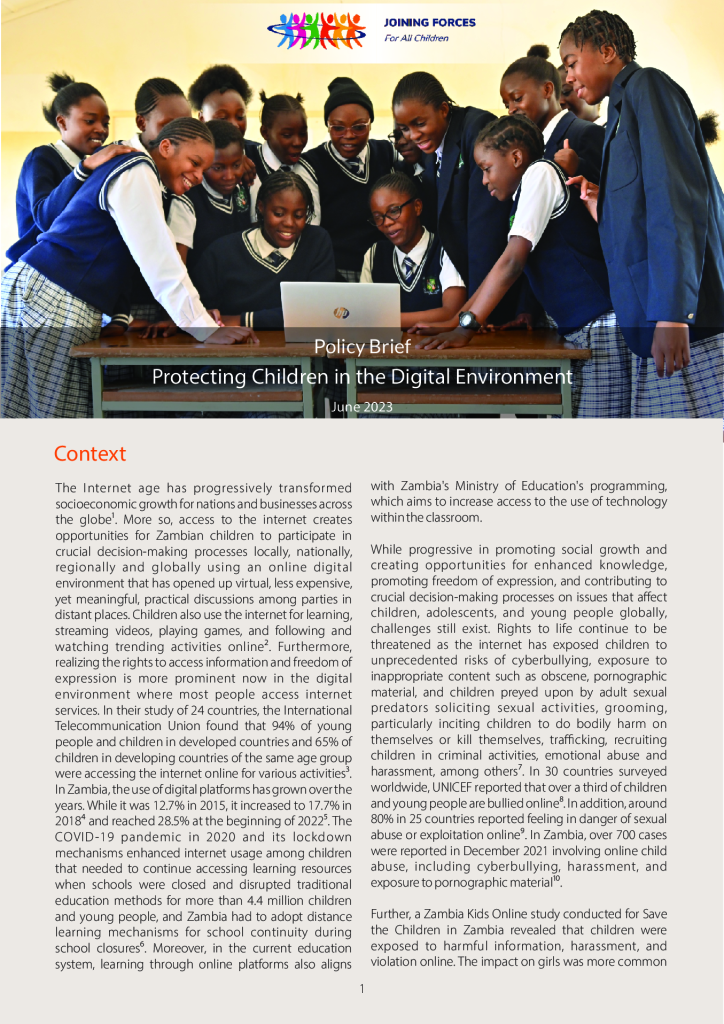
The Joining Forces Alliance came together to launch a new policy aimed at protecting children in Zambia’s rapidly growing digital space. As internet access expands, rising from 12.7% in 2015 to 28.5% in 2022, more children are learning, socializing, and expressing themselves online. This policy seeks to promote safe, inclusive, and empowering digital experiences for every child, ensuring that as Zambia goes digital, no child is left vulnerable. While digital platforms offer new opportunities for education and participation, they also expose children to serious risks such as cyberbullying, sexual exploitation, and harmful content. In December 2021 alone, Zambia recorded over 700 cases of online child abuse.
2023
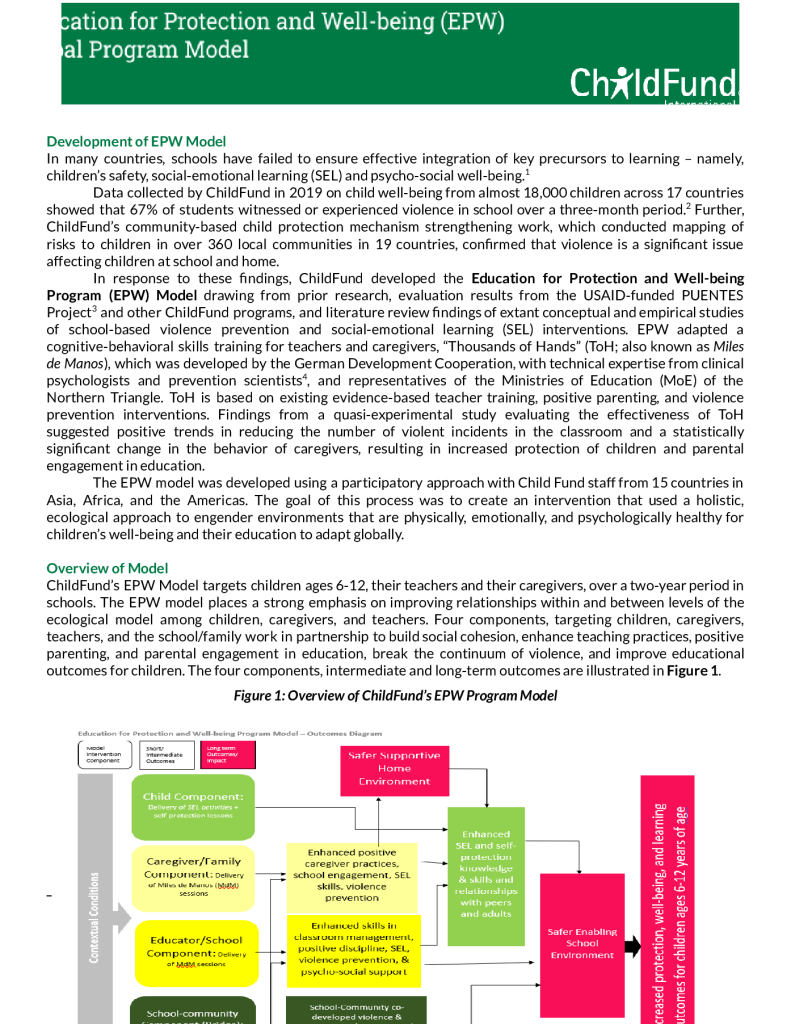
ChildFund’s Education for Protection and Wellbeing (EPW) Program Model targets children ages 6-12, their teachers and their caregivers in schools. The EPW model places a strong emphasis on improving relationships within and between levels of the ecological model among children, caregivers,and teachers.