

“Let Communities See Themselves in the Work” - Geoffrey Lungu on How Lasting Change Begins with Local Ownership
June 11, 2025

Geoffrey Lungu, Sponsorship Officer at ChildFund Zambia, has been with the organization since 1987, beginning his journey as a community administrator.
Geoffrey is one of ChildFund Zambia’s longest serving employees. Since 1987, he has walked hand in hand with communities, children, and colleagues to implement various development and humanitarian programs.
Geoffrey’s journey with ChildFund began in a modest community office in Rufunsa District in 1987. At the time, the organization was known as Christian Children’s Fund, and Geoffrey was appointed as a community-based administrator. It was a humble beginning, his desk was a gathering space for caregivers, local leaders, and children. But for Geoffrey, it was more than a job; it was an entry point into a life devoted to meaningful change.“I was the link between the community, Federation and the country office,” he recalls. “My role was to support sponsorship processes and make sure every child’s story reached their sponsor truthfully.” As Geoffrey immersed himself in this work, something deeper unfolded. He began to understand that lasting impact doesn’t come from delivering solutions, it comes from listening, involving, and walking with the community every step of the way.
Through the years, Geoffrey moved into more senior roles—from coordinating programs across multiple districts to mentoring younger staff as a Sponsor Relations Officer, firstly at the Federation office in Chongwe and later at Country Office. But the essence of his work remained grounded in one principle: community participation.
“Working at the grassroots level taught me that development doesn’t work when it’s top-down,” he explains. “It must be bottom-up, planned with communities, not for them. That’s how you build ownership. That’s how a project lasts.”
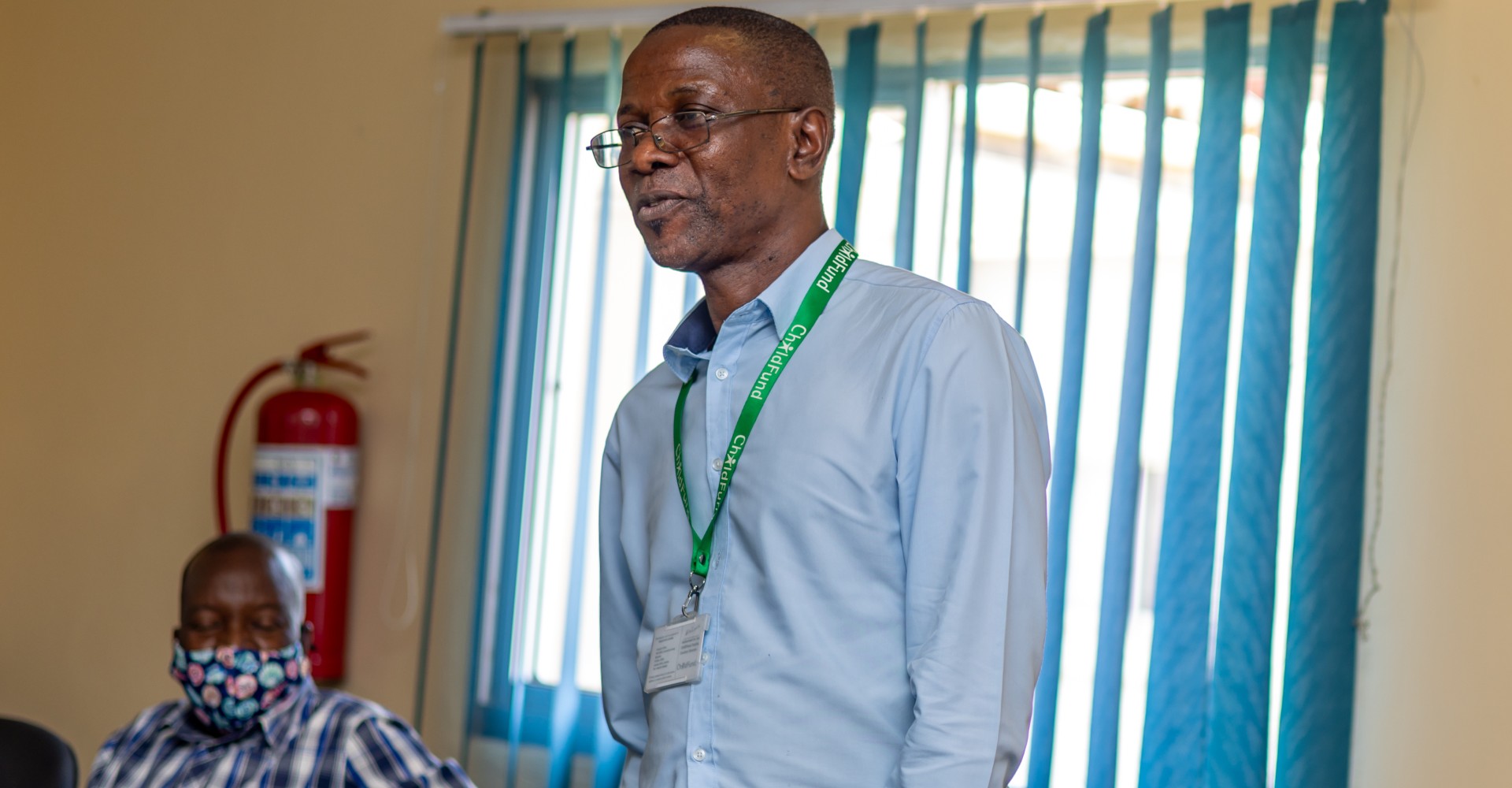
He shares with quiet pride how his team once introduced Children’s Committees in Rufunsa. It was a new concept at the time, giving children a structured way to share their thoughts and shape the programs meant to support them. “That changed everything,” he says. “We saw children becoming active participants, not just passive recepients. That model grew beyond Rufunsa, it was scaled across other areas. And it all started because we trusted the voices of those we usually overlook.
He recounts story after story of children he met in the early years, some facing incredible hardship, who are now leaders, parents, and professionals. One that stands out is Oliver, a boy who once sold homemade braziers to make ends meet. With support from the sponsorship program, Oliver went back to school, eventually completed college, and now leads a department in the civil service. “That’s the power of working with people, not on them,” Geoffrey says. “It’s the community that carried Oliver forward, ChildFund just walked alongside.”
Reflecting on his years across different levels of the organization, Geoffrey sees each stage as a classroom. “At the community level, we were like family. At the federation level, collaboration mattered most. At the national level, we align with vision. But in all of it, the principle stays the same: participation is not optional. It is the foundation.”
Geoffrey believes that participation isn’t just about holding meetings or ticking boxes. It’s about respect. “You have to believe the community has something valuable to offer. When they see their ideas reflected in a project, they commit to it. They protect it. And they teach others.”
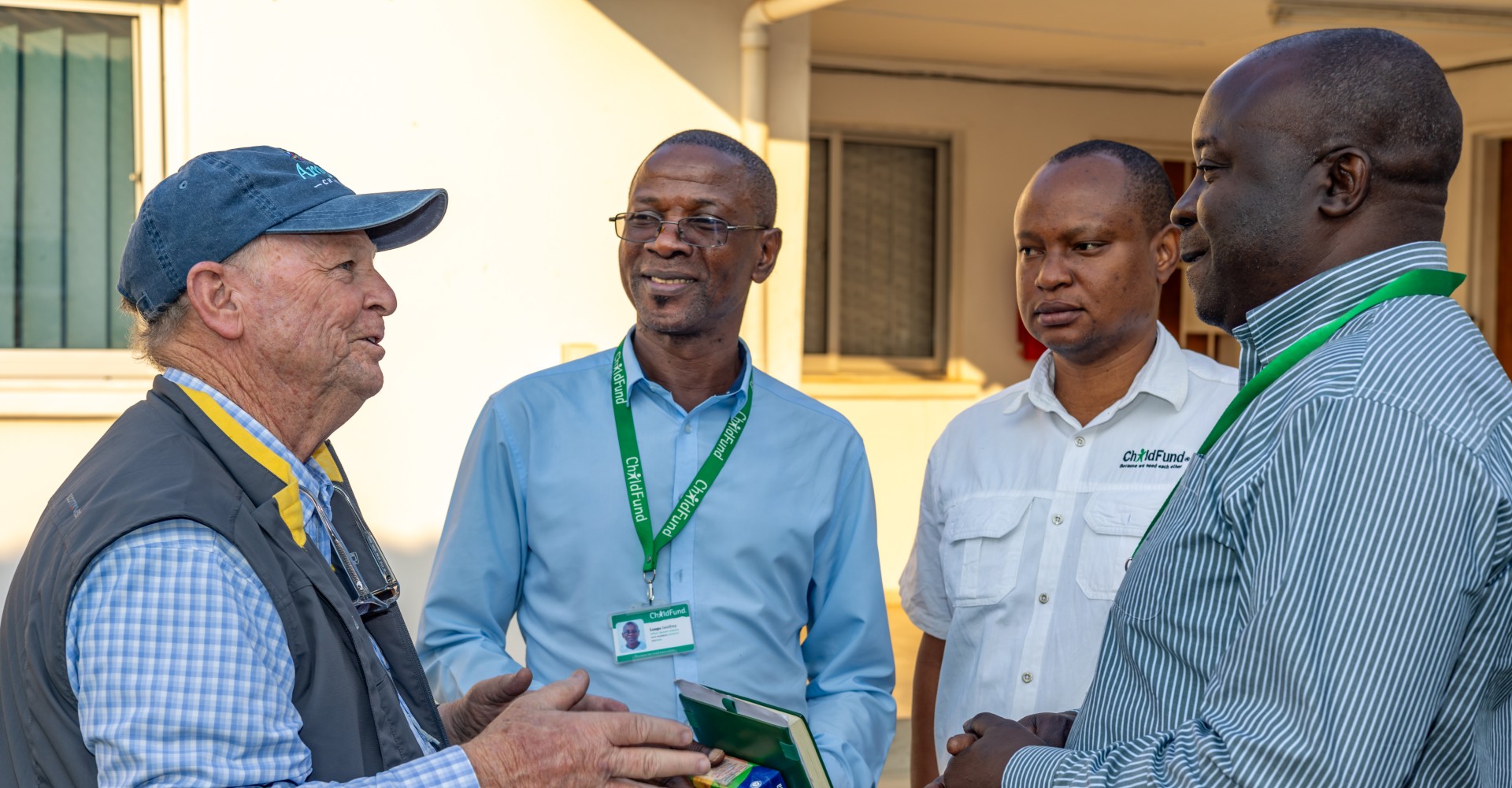
He credits his own growth to the people around him, including his colleagues, mentors, and community members who challenged and encouraged him. One of his early inspirations was Priscilla Chama, the current Communications Specialist at ChildFund. “She visited us during sponsorship awareness events, and the way she engaged, genuinely, passionately left a mark on me.”
Today, Geoffrey’s goal is to see local partners fully empowered to manage sponsorship services on their own. “That’s the future, strong local ownership. My role is to prepare them, support them, and then step back when they’re ready.”
Even after decades of service, Geoffrey remains warm and unassuming. “It’s hard to get me upset,” he says with a grin. “I may feel down sometimes, but I try to stay hopeful.”
And if he had to sum up everything he’s learned?
“Lead. Follow. Leave,” he says thoughtfully. “In this work, you must be ready to lead. If not, be willing to follow. And if you can’t do either, step aside. Let someone else move the mission forward.”
SHARE:




Related Resources
“Success is more than a job, it’s about giving back” — Nurse Kabwe’s sponsorship journey
Kabwe grew up in Kafue District with her parents, twin sister and three other siblings....
Advent Meets His Sponsors – The Forsters from Germany
ChildFund Zambia’s partnership with ChildFund Deutschland has long been anchored in trust, shared values, and...
Moses, a Former Sponsored Child, Set to Conquer Zambia’s Hospitality Industry
Moses Banda’s story is a reminder of what steady support, access to education, and personal...