

ChildFund school meals program feeds 16,400 learners, strengthens smallholder farmer incomes
September 22, 2026
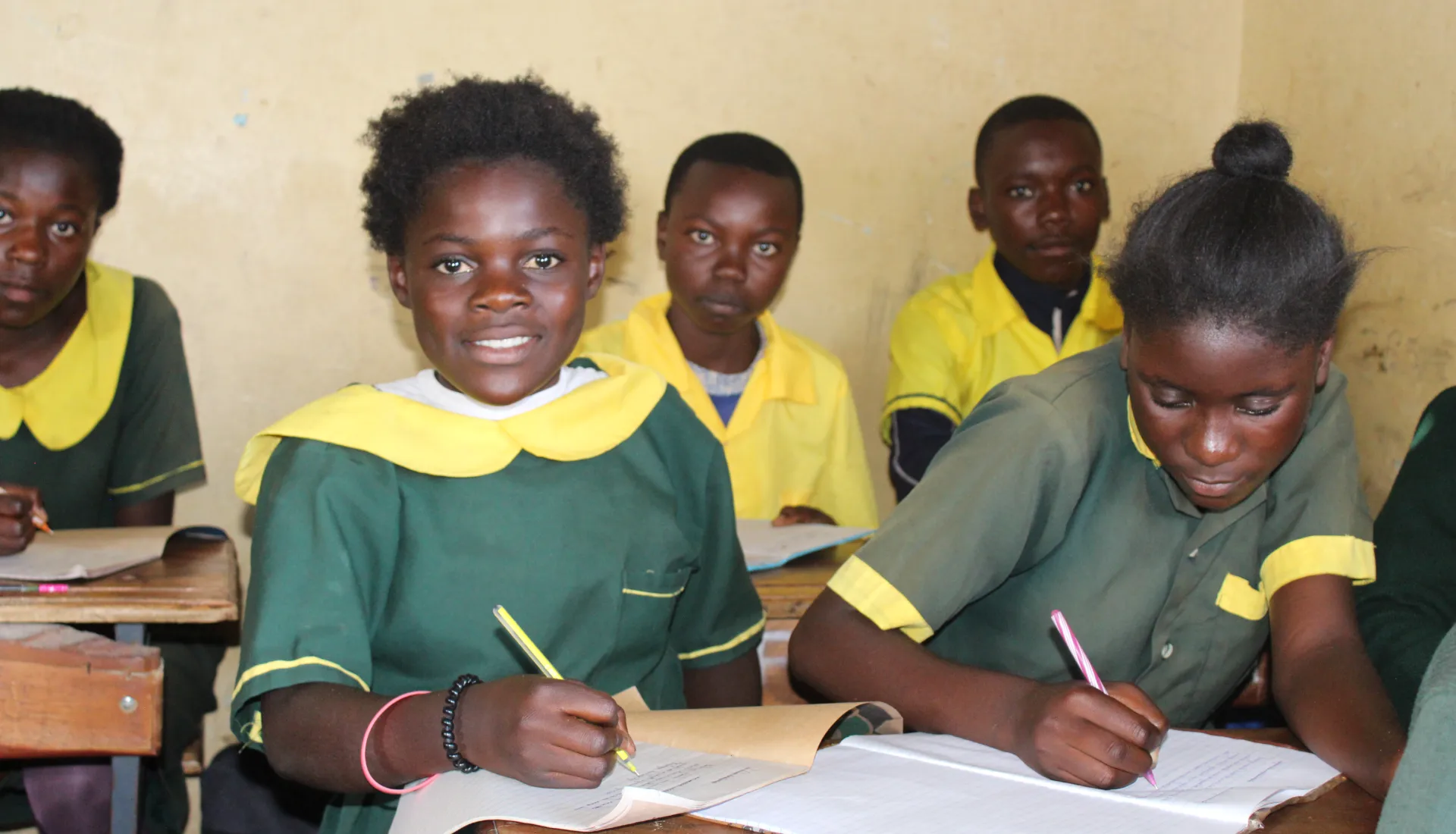
Nutritious school meals are boosting classroom focus and student attendance.
“Before, it was hard to concentrate in class when I was hungry. Now, I can learn better and stay focused because we eat at school. I feel stronger and happier, and I don’t miss school as much.”
That’s how Marina, a learner from Kafue, describes life since her school joined ChildFund Zambia’s Home-Grown School Meals (HGSM) initiative, a partnership with the World Food Programme that has reached more than 16,400 learners across 15 schools with a USD 50,000 investment.
Musonda, an 11-year-old pupil from Kabwata, remembers what school was like before:
“Some days, I would feel too weak to listen to my teacher. I even missed school because we had no food at home.”
For many children, hunger has long been an invisible barrier to education. Arriving at school on an empty stomach often means struggling to concentrate, falling behind in class, or missing school altogether, a challenge that grew sharper after President Hakainde Hichilema introduced free education in 2022. Enrollment surged nationwide, and schools already stretched thin faced even greater pressure to support every child who walked through their gates.
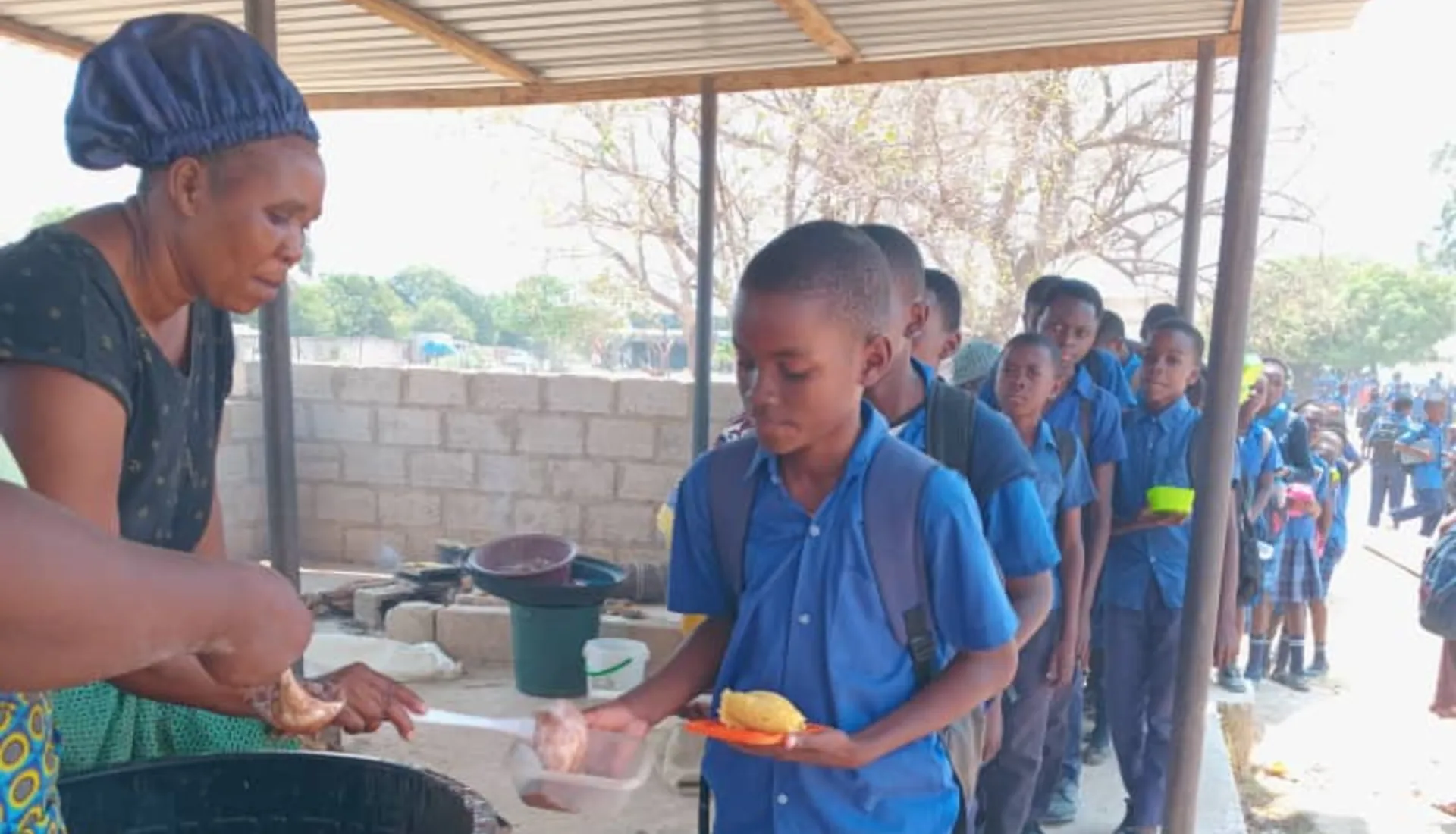
Tangible Impact: Boosting Nutrition and Enrollment
The rollout of HGSM has translated into measurable gains for students and schools alike:
Beyond providing daily meals, the Home-Grown School Meals (HGSM) Project has helped schools build practical systems to sustain the programme over time. During the project cycle, schools harvested vegetables such as tomatoes, cabbages and other crops, and when produce ripened at the same time, schools sold the surplus to local markets rather than allowing it to go to waste.
The proceeds were reinvested in seeds and seedlings for the next planting cycle, creating a cycle of production, income generation and replenishment. The funds also enabled schools to purchase essential cooking ingredients, including cooking oil and maize meal, when government supplies were insufficient. This approach helped keep meals available to learners while strengthening schools’ ability to manage resource gaps.
By combining government-provided inputs with locally generated resources, participating schools are building more resilient and sustainable school feeding systems.
Anna Mumbi, a teacher from Kabwata, has watched the shift firsthand:
“We have seen a remarkable improvement in attendance and participation. Learners are more alert, more engaged, and more confident in class. The school meal may seem simple, but it is making a profound difference in how children learn and perform
Growing Nutrition at School
At the heart of the initiative are 13 low-cost, irrigated school gardens established across participating schools. These gardens produce a steady supply of nutrient-rich crops year-round, leafy vegetables and vitamin A-rich maize, and double as living classrooms, where learners build hands-on agricultural skills and environmental awareness alongside their meals.
The gardens also make the program more resilient: by reducing reliance on external food sources, schools can sustain feeding programs even through unpredictable weather
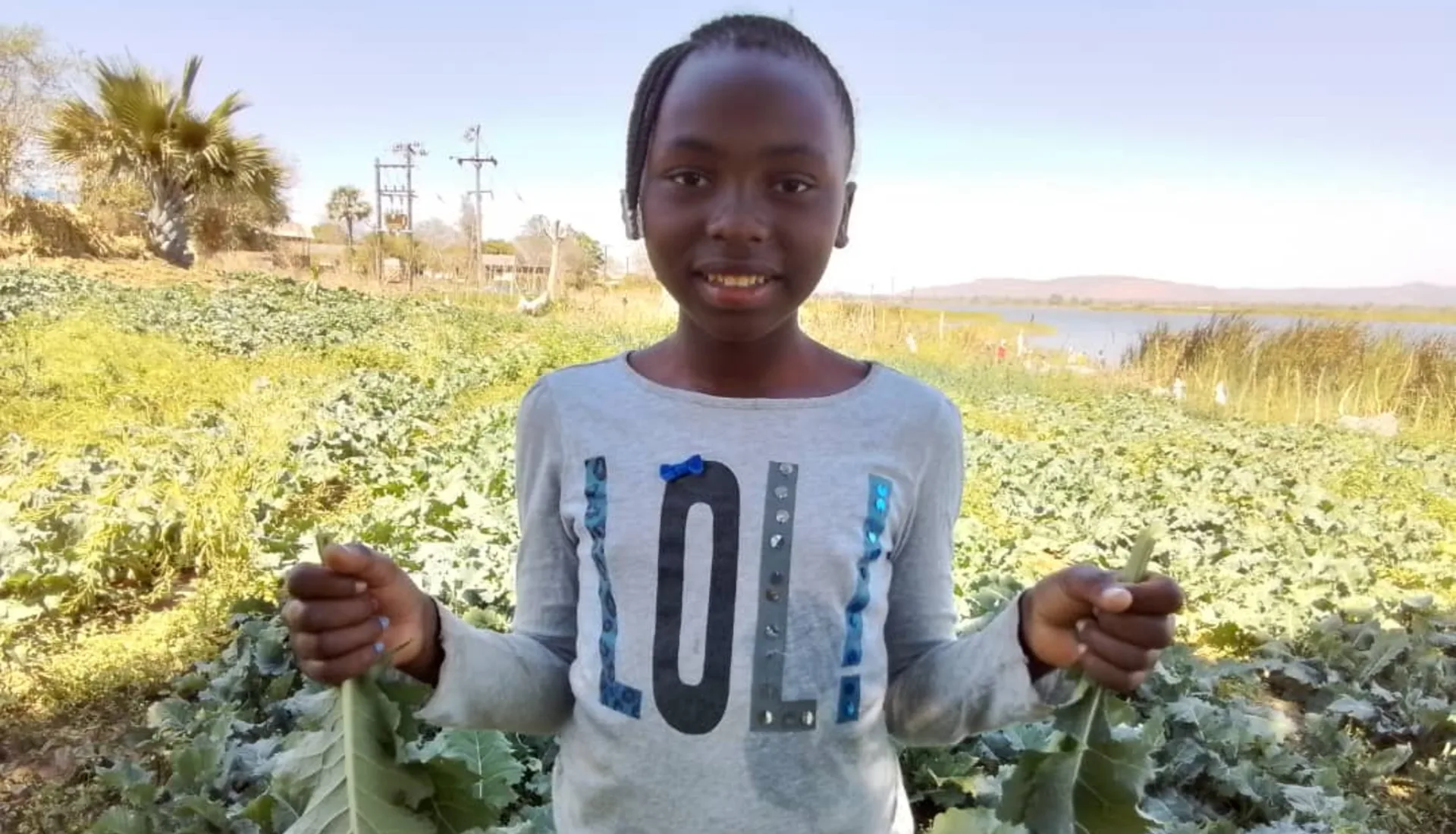
Powering Local Economies
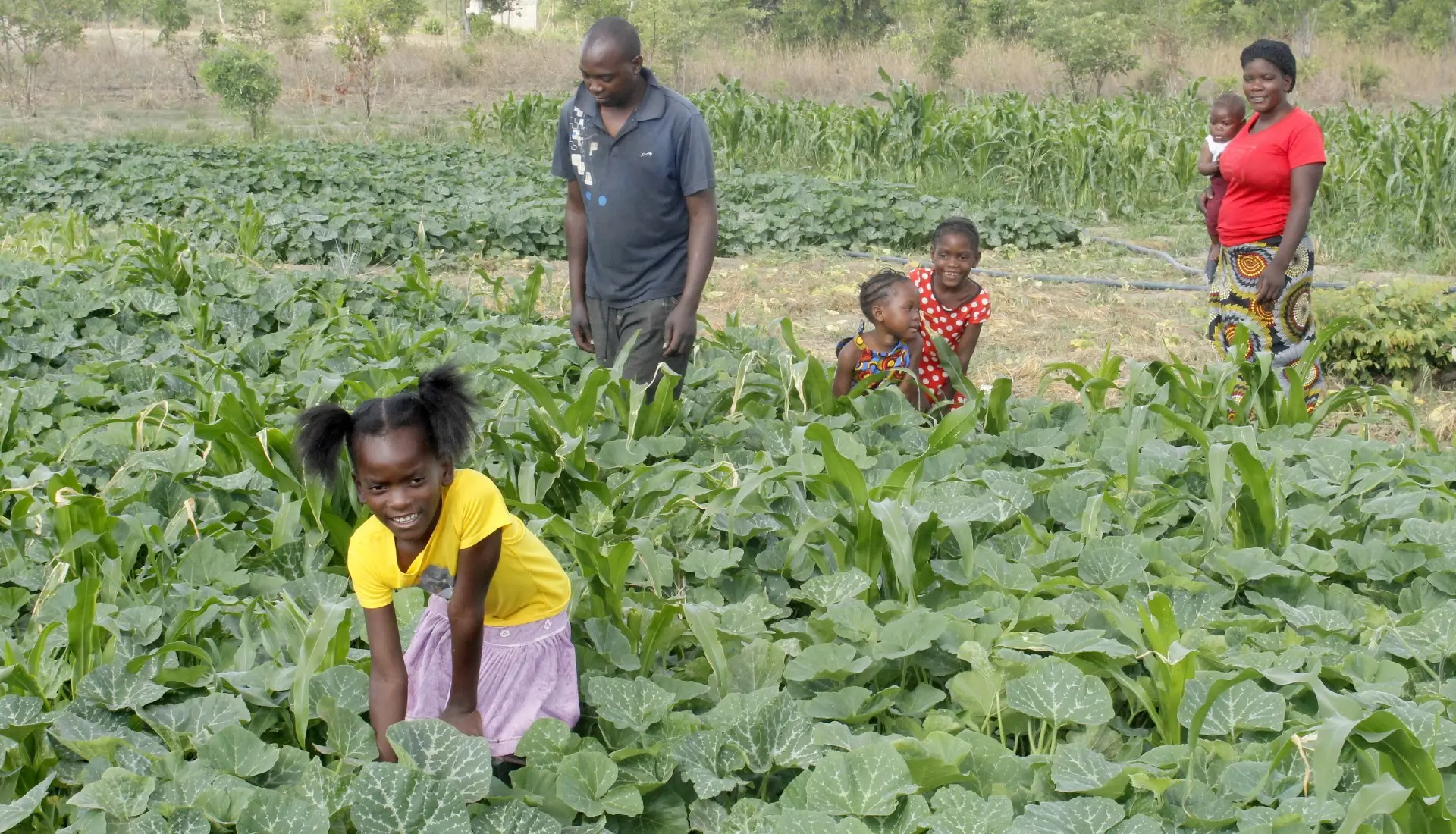
Aligned with Zambia’s national Home-Grown School Feeding Programme, HGSM connects schools directly with local farmers, many of them women, turning community agriculture into a cornerstone of child nutrition.
By sourcing food locally, the project has created stable, reliable markets for smallholder farmers, strengthening household incomes and building community resilience. In parts of Lusaka Province, where farmers often face limited access to land and unpredictable markets, schools now act as consistent buyers of fresh produce, while farmers benefit from improved coordination with local authorities and producer groups.
What’s Next
Although the World Food Programme-supported phase has concluded, the work continues. Activities remain active across all 15 schools, and ChildFund is seeking funding to expand to additional schools and communities.
“This project demonstrates the power of integrated, community-driven solutions in addressing some of the most pressing challenges facing children today,” says Victor Koyi, Country Director at ChildFund Zambia. “When we link schools to local farmers, we improve child nutrition and education outcomes while also strengthening livelihoods and building resilience.”
For Marina, the impact is simpler to describe: she’s stronger, happier, and rarely misses school anymore. Multiplied across 16,400 children, that’s the kind of change a daily healthy meal can make.
SHARE:




Related Resources
Clean water helps children in Muchimazi stay healthy and spend more time learning
In Muchimazi, Nyimba District, access to safe water is helping children stay healthy, spend more...
MAP, ChildFund donate USD 1M micronutrient supplements to improve maternal and child nutrition
ChildFund International and MAP International have donated more than 129,000 bottles of Multiple Micronutrient Supplements...
ChildFund advisory board visits Luangwa to review program impact
ChildFund’s Advisory Board embarked on its first visit to Luangwa District since being elected, marking...